
Indian Oil Corporation (IOC) and two other public sector oil firms will install 22,000 electric vehicle (EV) charging stations over the next 3-5 years to support the nation's target to reduce its carbon intensity and reach net zero emissions by 2070. IOC, the country's largest state-controlled refiner by capacity, will set up EV charging facilities at 10,000 fuel outlets over the next three years, chairman Shrikant Madhav Vaidya said. Bharat Petroleum Corporation Ltd (BPCL) said it will set up 7,000 stations over the next five years while Hindustan Petroleum Corporation Ltd (HPCL) has plans for 5,000 stations.
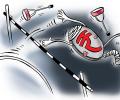
Revenue from divestment has fetched Rs 40,000-50,000 crore against target of Rs 2.10 trillion.
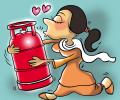
#GiveItUp but no matching LPG connections for BPL

IOC is building a 5 million tonnes per annum LNG terminal at Ennore near Chennai which is to be completed by 2017.

Indian Oil Corporation, Hindustan Petroleum Corporation and Bharat Petroleum Corporation are losing Rs 486 crore (Rs 4.86 billion) per day as they are made to sell diesel, domestic LPG and kerosene way below cost to keep inflation under check.

The battered rupee gained 225 paise to 66.55 against the dollar today, the most in at least 15 years, after the Reserve Bank of India eased pressure in the currency market by starting a facility for state-run oil refiners to buy foreign exchange.

With the rupee continuing to remain weak against the US dollar, losses on diesel have climbed to Rs 9.45 per litre, upsetting the government's subsidy maths.

A pilot for daily revision of petrol and diesel price will be first implemented in Puducherry and Vizag in Andhra Pradesh, Udaipur in Rajasthan, Jamshedpur in Jharkhand and Chandigarh
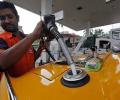
Petrol gets expensive but diesel is cheaper by Rs 1.35/ per litre.
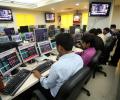
In the broader market, BSE Midcap and BSE Smallcap indices mirrored the gains in headline indices and rose 1% and 0.9% respectively.
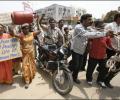
Govt diverts Rs 253-crore subsidy savings to the poor.
In 16 days, petrol price has been hiked by Rs 8.3 per litre and diesel by Rs 9.46 - a record increase in rates of the fuel in any fortnight since pricing was deregulated in April 2002.

Sena also said that laying a brick for the $44 billion (Rs 3 lakh crore) mega refinery project at Nanar in Ratnagiri district of Maharashtra would be akin to laying the foundation stone for a cancer hospital there.
.jpg)
Investment can only be by prospective dealers.
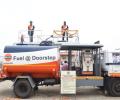
The permission right now is for delivery only for stationary usage. This limits the service to those who operate units like diesel generation sets.
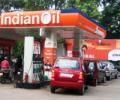
The government on Thursday sanctioned Rs 17,772 crore (Rs 177.72 billion) cash subsidy to fuel retailers like IOC to cover for half of the revenues they lost on selling diesel and cooking fuels below cost in the September quarter.

The S&P BSE Sensex closed 318 points at 24,455 and the Nifty50 shed 99 points to end at 7,438.
.jpg)
The Oil Ministry on October 31 issued orders asking upstream oil and gas producers like ONGC and Oil India Ltd to give Rs 16,729.74 crore (Rs 167.29 billion) to make up for 47 per cent of the Rs 35,328-crore (Rs 353.28 billion) revenue that retailers lost on selling diesel, domestic LPG and kerosene at government controlled rates in second quarter.

Indian companies place orders worth $600 million for US crude, which is likely to increase by nearly $2 billion in the near future.
Oil companies on Wednesday slashed petrol and diesel prices by Rs 2, with effect from midnight tonight.
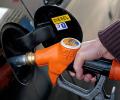
The price of diesel sold to bulk users has been hiked by about Rs 25 per litre in line with a near 40 per cent rise in international oil prices, but retail rates at petrol pumps remain unchanged, sources said. Petrol pump sales have jumped by a fifth this month after bulk users like bus fleet operators and malls queued up at petrol bunks to buy fuel rather than the usual practice of ordering directly from oil companies, widening the losses of retailers. Worst hit are private retailers like Nayara Energy, Jio-bp and Shell, who have so far refused to curtail any volume despite a surge in sales.

Not surprisingly, equity investors are bidding-up stock prices across sectors and the broader market is now more valuable than pre-Covid levels.

The report, 'Road Ahead Clears Up for Oil PSUs', says the decline in underrecoveries, or losses oil-marketing companies incur on selling petroleum products below market price, will have a significant positive impact on both upstream and downstream public-sector oil companies.
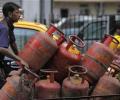
Many users did not know that their entitlement was not coming to their regular bank account but going to an account which they had not applied for.

'The actual price of petrol is Rs 35 and it jumps to Rs 88 because of government taxes.'

For BCPL's branded petrol, Speed, the price differential with regular petrol is now between Rs 2.74 and Rs 3.75 per litre.

Tata Consultancy Services (TCS), the group's biggest cash generator, overtook Vedanta to become the highest dividend payer in India in FY23. The IT services major paid Rs 42,090 crore for FY23, up 167.4 per cent from Rs 15,738 crore for FY22. The 10 biggest payers together shelled out Rs 2.06 trillion for FY23, more than double the Rs 98,371 crore for FY22.

Following up on Finance Minister Arun Jaitley's Budget announcement of creating an integrated oil company, India's biggest oil and gas producer ONGC may buy all of the government's 51.11 per cent stake in Hindustan Petroleum Corporation Ltd.
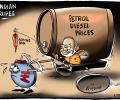
Despite a massive decline in crude oil prices since 2012 -- Modi has been prime minister in six of these eight years -- petrol in Delhi has become 10 per cent costlier and diesel 97 per cent, as of July 2.

'There exists a 'brotherhood' of sorts for a very long time and corrupt dealers and corrupt OMC officials are in it together,' Ashwani Attrish, founder, Empowering Petroleum Dealers Foundation, tells Sudhir Bisht, a veteran of the petroleum industry.
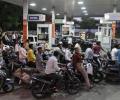
In Maharashtra, the oil industry had tenancy protection till 1999.
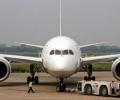
Jet fuel (ATF) price was on Monday hiked by a steep 56.5 per cent and that of non-subsidised cooking gas LPG by Rs 11.5 per cylinder on the back of firming up of international oil rates, but petrol and diesel prices continued to remain on freeze for a record 78th day. Aviation turbine fuel (ATF) price was hiked by Rs 12,126.75 per kilolitre (kl), or 56.5 per cent, to Rs 33,575.37 per kl in the national capital, according to a price notification by State-owned oil marketing companies.

BSE Smallcap index outperformed the frontline indices to rise 0.6%, while the BSE Midcap was flat
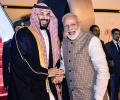
In a tweet, Modi said India is 'delighted to welcome' the Crown Prince of Saudi Arabia.

IOC along with HPCL and BPCL took a hit of about Rs 4,500 crore from absorbing Re 1 a litre hike.

On the last day of FY!5, the Sensex ended lower by 18.37 points at 27,957.49.
I admire Kejriwal's intelligence but pity the fact that he had to use all the ingenuity and scheming to achieve his revenue enhancement goal, says Sudhir Bisht.
Global crude oil prices have slumped by 49 per cent during the same period

As fuel prices surged in September, the government's decision to ask companies to cut price by Rs1 each on a litre of petrol and diesel came as a dampner for private players.

The companies' underrecoveries stood at a whopping Rs 1,39,869 crore last financial year. Of that, Rs 62,837 crore was accounted for by diesel alone.
